Skip to product information
1 of 1

Ancient Egypt

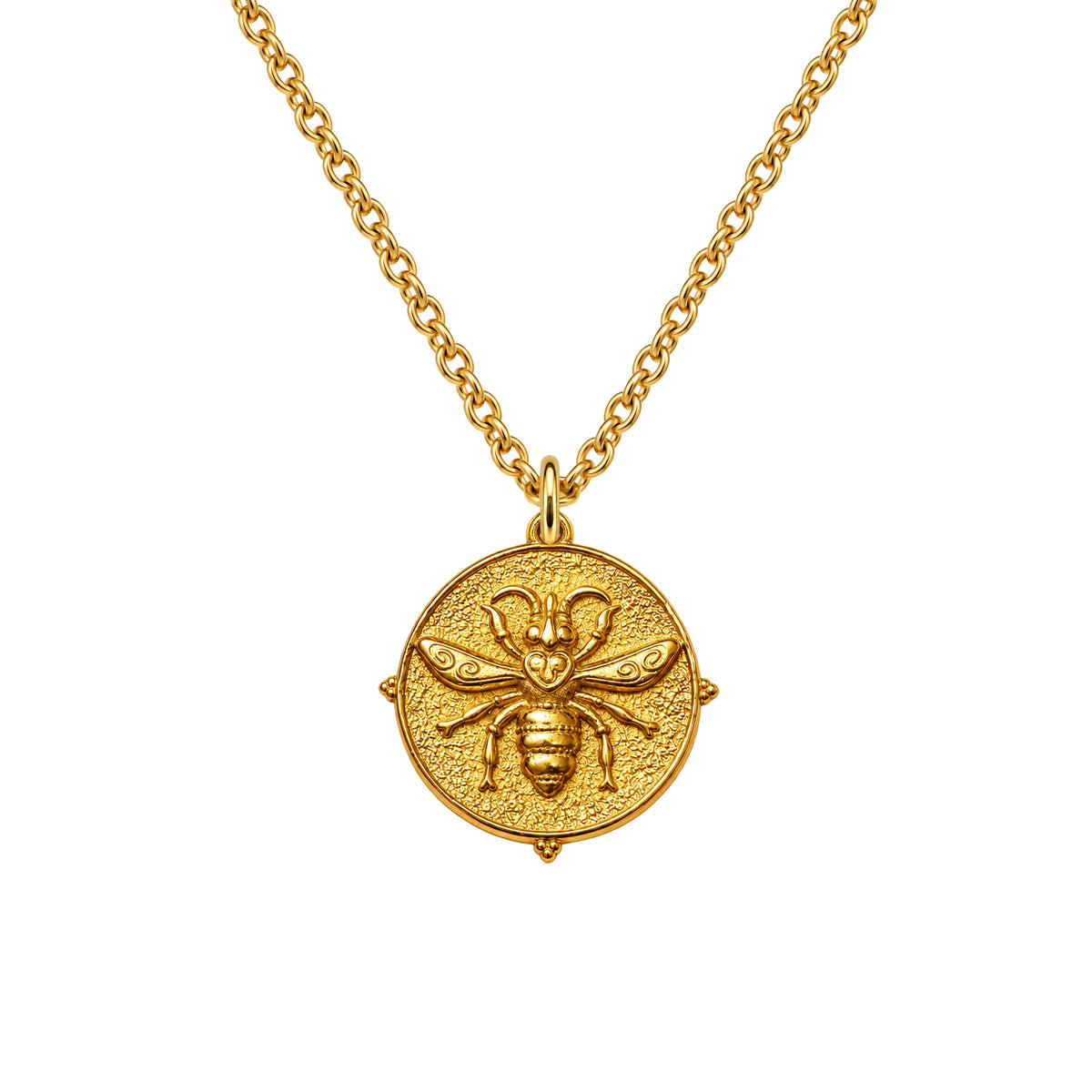
Honey Bee Necklace

Honey Bee Necklace

Regular price £48.00 GBP
Regular price Sale price £48.00 GBP
Sale Sold out
Taxes included. Shipping calculated at checkout.

A tiny tribute to the beekeepers of ancient Egypt.

Inspired by the ancient beekeepers of Egypt, who tended their hives and gathered honey along the Nile thousands of years ago.
Quantity

DETAILS

HISTORICAL INSPIRATION

The ancient beekeeping traditions of Egypt and surviving scenes of honey production along the Nile I prefer this to tying the necklace to one specific tomb because you've told me the inspiration is ancient Egyptian beekeeping generally, rather than that the pendant was directly copied from the Rekhmire scene.

MATERIAL

18ct gold plated stainless steel

PENDANT SIZE

19mm

CHAIN LENGTH

Adjustable to 16", 18" or 20" (40.6 cm, 45.7 cm or 50.8 cm)

CARE

To keep your jewellery looking its best, gently wipe with a soft cloth after wear and store separately when not in use.

Avoid abrasive cleaners, polishing compounds and anything that may scratch or unnecessarily wear the plated surface.

DELIVERY & RETURNS

Your Shinar jewellery will arrive carefully packaged and ready to give — or to keep.

UK and international delivery options, costs and estimated delivery times are shown at checkout.

Eligible unworn jewellery may be returned in accordance with our Returns Policy.

OUR GUARANTEE

View full details
THE STORY

The Beekeepers of the Nile

More than three thousand years ago, beekeepers were already tending hives beside the Nile. Ancient Egyptian scenes preserve an extraordinary record of their work: cylindrical hives arranged together, bees controlled with smoke, honeycomb collected and the resulting honey prepared for storage.

One of the most remarkable surviving records appears in the Tomb of Rekhmire at Thebes. Dating to Egypt's 18th Dynasty, the original decoration includes men gathering and processing honey. A meticulous facsimile of the scene by Nina de Garis Davies is now preserved by The Metropolitan Museum of Art.

Honey was a valuable product in Egyptian life. Archaeological evidence even preserves containers identified by their inscriptions as having held honey. A New Kingdom pottery fragment in The Met bears a hieratic inscription incorporating the sign of a bee to identify its contents as honey; the museum notes that honey was valued both as a sweetener and for therapeutic applications recorded in ancient medical texts.

The bee carried significance beyond the hive. In Egyptian writing it could serve as a royal symbol associated with Lower Egypt. A painted limestone bee from the pyramid temple of Senwosret I, dating to around 1971–1926 BC, formed part of a monumental hieroglyphic inscription and represented the King of Lower Egypt.

Inspired by this remarkable relationship between bees and ancient Egyptian life, the Honey Bee of the Nile Necklace transforms the tiny creature into a golden medallion — carrying a story of the hive, honey and the Nile into the present day.

WEAR THE PAST.
The Beekeepers of the Nile
ARCHIVE NOTE
GATHERING HONEY, TOMB OF REKHMIRE
Thebes, Egypt · Dynasty 18 · c. 1479–1425 BC
Facsimile by Nina de Garis Davies · Tempera on paper
The Metropolitan Museum of Art · Public Domain
DESIGNED FOR EVERYDAY LIFE

MADE FOR THE AGES

THE SHINAR STANDARD

◇

DURABLE STAINLESS STEEL

Made from hard-wearing stainless steel, chosen for strength and durability.

◯

18CT GOLD PLATED

Finished in our rich 18ct gold for the warmth and character of fine gold jewellery.

≈

WATERPROOF

Designed to go wherever you do — waterproof for everyday wear, from the shower to the pool and sea.

∞

SHINAR GUARANTEE

Designed for lasting wear and supported by the Shinar Jewels guarantee.

ANCIENT INSPIRATION · MODERN MATERIALS · MADE FOR THE AGES